
Layers of Swiss History
Switzerland’s history is visible in every canton. Celtic tribes settled around Lake Neuchâtel over 2,000 years ago. Roman ruins remain in Avenches and Augusta Raurica, both open to visitors for CHF 8–12. Medieval confederation began in 1291 at Rütli Meadow, near Lake Lucerne. The Federal Charter is displayed at Schwyz’s Bundesbriefmuseum (entry CHF 5). Bern’s UNESCO-listed Old Town preserves 15th-century arcades and clock towers. Castles like Château de Chillon (CHF 13.50) and Bellinzona’s fortresses (CHF 12) show medieval defense. Switzerland’s four official languages—German, French, Italian, Romansh—reflect centuries of regional autonomy. Borders between cantons often follow old linguistic lines. Swiss neutrality dates to the 1815 Congress of Vienna. WWII-era bunkers still dot the Alps; some are museums, such as Festung Vitznau (CHF 12). Local customs, like Appenzell’s Landsgemeinde (open-air voting), have medieval roots. Regional festivals, dialects, and foods often trace back to historical alliances and migrations. Understanding these layers helps travelers appreciate why each Swiss region feels distinct.
From Confederation to Nation
The Swiss Confederation began in 1291. Three cantons—Uri, Schwyz, and Unterwalden—swore an oath at Rütli Meadow above Lake Lucerne. You can visit the Rütli site by boat from Brunnen (CHF 25, 30 minutes). Swiss alliances expanded through battles like Morgarten (1315) and Sempach (1386). Both sites have memorials and annual commemorations. The Reformation split cantons along religious lines. Zürich and Geneva became Protestant centers. Lucerne and Fribourg stayed Catholic. These differences remain visible in local festivals and church architecture. During the Napoleonic era (1798–1815), Switzerland was occupied and reorganized. The Act of Mediation (1803) restored cantonal autonomy. In 1848, Switzerland adopted a federal constitution. Bern became the capital. The Bundeshaus (Federal Palace) in Bern offers guided tours for CHF 15. Swiss National Day, August 1, marks the 1291 oath. Fireworks and celebrations occur nationwide. The Swiss National Museum in Zürich (CHF 10) displays artifacts from these eras. Many cantonal museums highlight local roles in confederation and nation-building. Travelers can trace these milestones on marked heritage trails, especially around Lake Lucerne and Bern.
Living History: Must-See Sites
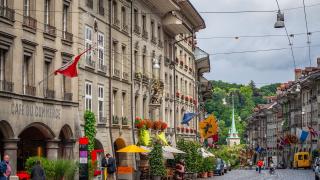
Bern’s Old Town is a UNESCO World Heritage site. Medieval arcades, the Zytglogge clock tower, and the Federal Palace show Swiss political history. Entry is free; guided tours start at CHF 20.
Zurich’s Altstadt preserves Roman and medieval layers. The Swiss National Museum (CHF 10, closed Mondays) displays artifacts from prehistoric times to the present.
Geneva’s Old Town features the Reformation Wall and St. Pierre Cathedral. The International Red Cross and Red Crescent Museum (CHF 15, closed Mondays) documents Switzerland’s humanitarian legacy.
Lucerne offers the Musegg Wall, a 14th-century fortification. The Chapel Bridge, built in 1333, is Switzerland’s oldest wooden covered bridge.
Bellinzona has three UNESCO-listed castles: Castelgrande, Montebello, and Sasso Corbaro. Combined ticket: CHF 28.
Château de Chillon near Montreux is Switzerland’s best-preserved medieval castle. Entry: CHF 13.50. Audio guides available.
Munot Fortress in Schaffhausen overlooks the Rhine. Entry is free; guided tours on request.
Most sites are accessible by train; Swiss Travel Pass covers local transport. Many museums offer free admission for children under 16. Allow 1–2 hours per site. Advance booking is advised in summer.
Traditions Shaped by the Past
Switzerland has four official languages: German, French, Italian, and Romansh. This reflects centuries of regional autonomy. Each canton preserves its language and customs. In Graubünden, Romansh is spoken in villages like Disentis. Street signs appear in multiple languages, especially in Bern and Fribourg.
Historical festivals are celebrated across Switzerland:
- Sechseläuten in Zürich marks the end of winter with a parade and burning of the Böögg snowman (April, free to watch).
- Fête de l’Escalade in Geneva commemorates the city’s 1602 victory over Savoy. Locals wear costumes and eat chocolate marmite pots (December, free events).
- Unspunnenfest in Interlaken revives alpine traditions: stone-throwing, yodeling, and flag-throwing (every 12 years, next in 2029; entry CHF 15–40).
Traditional foods have historic roots:
- Fondue and raclette originated in alpine dairies. Try them in mountain huts for CHF 25–35 per person.
- Swiss chocolate dates to the 19th century. Visit Maison Cailler in Broc (CHF 15, 1.5 hours).
Travelers can join public celebrations, visit local markets, and dine in historic restaurants.
Smart Strategies for History Buffs
Switzerland’s historical sites often use German, French, or Italian for signage. Romansh is rare. English translations are common in major museums, but not guaranteed at rural or smaller sites.
Swiss Travel Pass covers trains, buses, and boats to most historical towns. Prices start at CHF 244 for three days. Regional passes, like Tell-Pass (Lake Lucerne), offer local discounts.
Guided tours provide deeper context. Book city tours in Bern, Geneva, or Zürich for CHF 20–35. Many castles, such as Château de Chillon, offer English audio guides for CHF 6.
Check opening hours. Some abbeys and fortresses close for lunch or on Mondays. Accessibility varies. Medieval towers and ramparts may have steep stairs and no lifts.
For English resources, visit the Swiss National Museum (Zürich) or Forum of Swiss History (Schwyz). Both offer English brochures and digital guides.
Official websites list up-to-date details. Always confirm before visiting remote or seasonal sites.