
Switzerland’s Multilingual Map
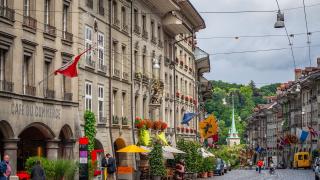
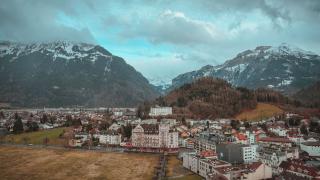
Switzerland has four official languages: German, French, Italian, and Romansh. Language regions are clearly defined.
- German (Schweizerdeutsch) is spoken in central and eastern Switzerland. Cities: Zurich, Bern, Basel.
- French (Français) is used in the west. Cities: Geneva, Lausanne, Neuchâtel.
- Italian (Italiano) is spoken in the south, mainly in Ticino and parts of Graubünden.
- Romansh (Rumantsch) is used by about 0.5% of the population, mostly in Graubünden.
Street signs, train announcements, and menus follow the local language. In Zurich, you’ll see "Bahnhof" for train station. In Geneva, it’s "Gare". English is common in hotels, airports, and tourist sites. In rural areas, English is rare. Basic greetings in the local language are appreciated. "Grüezi" in German regions, "Bonjour" in French areas, "Buongiorno" in Italian zones. Learning a few local words helps with directions and politeness. Most written information uses Standard German, not Swiss German. Romansh is rarely needed for travelers.
German, French, or Italian?
German (Schweizerdeutsch) is the main language in Zurich, Bern, Basel, and Lucerne. Spoken by about 63% of Swiss people. Swiss German is used in conversation, but written communication (signs, menus, tickets) uses Standard German (Hochdeutsch). Travelers will hear dialects like Züritüütsch (Zurich) or Bärndütsch (Bern). Standard German is understood, but rarely spoken natively.
French (Français) dominates Geneva, Lausanne, Neuchâtel, and the canton of Vaud. About 23% of Swiss speak French. Swiss French is close to Parisian French, but some local words differ. Written and spoken forms are mutually intelligible with standard French.
Italian (Italiano) is spoken in Ticino (Lugano, Bellinzona) and parts of Graubünden. About 8% of Swiss speak Italian. Swiss Italian is similar to standard Italian, but local vocabulary and intonation may differ.
Tips for language regions:
- Language changes can happen within 10-20 km, especially near Biel/Bienne or Fribourg.
- Train stations display city names in all relevant languages (e.g., Genève/Geneva).
- Staff in hotels and restaurants often speak English, but greetings change: "Grüezi" (German), "Bonjour" (French), "Buongiorno" (Italian).
- Road signs switch languages at cantonal borders.
- In multilingual cities, announcements may be made in two or three languages.
Must-Know Phrases & Pronunciation
Swiss German (Schweizerdeutsch):
- 'Grüezi' (pronounced: GREW-tsi) is the standard greeting in Zurich, Bern, and Lucerne. Use it during the day. In Basel, say 'Griezi' or 'Salü'.
- 'Danke' (DAHN-keh) means thank you. 'Merci' is also common, borrowed from French.
- 'Entschuldigung' (ent-SHOOL-dee-goong) means excuse me or sorry.
- Use 'Grüezi' formally, 'Hoi' (HOY) informally with friends.
- Swiss German is not used in writing. Signs and menus are in Standard German.
French (Western Switzerland):
- 'Bonjour' (bohn-ZHOOR) for hello. 'Bonsoir' (bohn-SWAHR) in the evening.
- 'Merci' (mehr-SEE) for thank you.
- 'Pardon' (par-DOHN) or 'Excusez-moi' (ex-KYOO-zay mwah) for excuse me.
- Use 'vous' for formal, 'tu' for informal situations.
Italian (Ticino, southern Graubünden):
- 'Buongiorno' (bwohn-JOHR-noh) for hello. 'Ciao' (CHOW) is informal.
- 'Grazie' (GRAHT-tsyeh) for thank you.
- 'Scusi' (SKOO-zee) for excuse me.
- Use 'Lei' for formal, 'tu' for informal.
Romansh (Graubünden):
- 'Allegra' (ah-LEH-grah) for hello. 'Grazia' (GRAHT-tsya) for thank you.
- Romansh is rare; only 0.5% speak it. Basic greetings are appreciated.
Pronunciation tips:
- Swiss German 'r' is rolled. French nasal vowels are softer than in France. Italian is clear and open.
- Formality is important in business and when addressing older people.
Cultural Nuances & Etiquette
Swiss communication is formal, especially with strangers. Use polite forms: Sie (German), vous (French), Lei (Italian). Avoid using du, tu, or tu unless invited. In German-speaking areas, address adults by title and surname. In French and Italian regions, titles are also important. Greetings differ by region:
- German areas: 'Grüezi' (day), 'Guten Abend' (evening)
- French areas: 'Bonjour' (day), 'Bonsoir' (evening)
- Italian areas: 'Buongiorno' (day), 'Buonasera' (evening)
Small talk is brief. Swiss people value privacy. Avoid personal questions. Punctuality is expected in all regions. Interrupting is seen as rude. In shops, always greet staff when entering and leaving. Use 'Danke', 'Merci', or 'Grazie' for thanks, depending on the region. Common misunderstandings:
- Using informal address too soon
- Assuming everyone speaks English
- Not greeting in shops or lifts
To avoid offense, follow local greeting customs. Wait for invitation before using informal language. Observe how locals interact. In multilingual cities like Biel/Bienne, switch language if addressed differently. Always show respect for regional language preferences.
Smart Strategies for Communication
English is widely understood in Swiss cities, airports, and hotels. In rural areas, English is less common. Use Standard German (Hochdeutsch) for written communication in German-speaking regions. Swiss German (Schweizerdeutsch) is spoken, but rarely written. French is used in Geneva and Lausanne; Italian in Ticino. Romansh is limited to parts of Graubünden.
- Useful apps: Download Swiss-specific apps like SBB Mobile (public transport), Google Translate, and DeepL. SBB Mobile offers real-time train info in English, German, French, and Italian.
- Phrasebooks: Buy a Swiss German, French, or Italian phrasebook at train stations (CHF 10-15). Look for "Kauderwelsch" or Lonely Planet editions.
- Translation tools: Free Wi-Fi is available at major Swiss train stations for app use. Offline translation apps are recommended for mountain villages.
- Menus and signage: Menus often list dishes in German, French, and Italian. Ask for an English menu: "Haben Sie eine englische Speisekarte?" (German), "Avez-vous un menu en anglais?" (French).
- Public transport: Ticket machines offer English. Station names remain in the local language. Double-check platform numbers.
- Asking for help: Say "Entschuldigung, sprechen Sie Englisch?" (German) or "Excusez-moi, parlez-vous anglais?" (French).
- Local effort: Use "Grüezi" or "Bonjour" as a greeting. Locals appreciate the effort.
Quick Reference & Pro Tips
Essential Swiss phrases:
- Swiss German: Grüezi (hello), Danke (thank you), Entschuldigung (excuse me)
- French: Bonjour (hello), Merci (thank you), Pardon (excuse me)
- Italian: Buongiorno (hello), Grazie (thank you), Scusi (excuse me)
Etiquette reminders:
- Always use formal address: Sie (German), vous (French), Lei (Italian)
- Greet shopkeepers and staff when entering or leaving
- Avoid speaking loudly in public transport
Where to get help:
- SBB ticket machines offer language options
- Tourist offices in all major cities provide free language maps
- Pharmacies and post offices often have multilingual staff
Pro tip:
- Carry a pocket phrasebook or download a Swiss language app
- Locals appreciate any effort to use their language
- Stay patient; language regions change quickly, sometimes within 20 km