
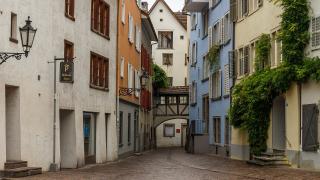

Switzerland’s Multilingual Mosaic
Switzerland has four official languages, each tied to specific regions:
- German (Schweizerdeutsch) is spoken by about 63% of Swiss residents. It dominates Zurich, Bern, Lucerne, and Basel. Local dialects differ from standard German. Menus and street signs use High German (Hochdeutsch).
- French is used in western cantons. Geneva, Lausanne, and Neuchâtel are French-speaking. French is the primary language for administration and schools in these areas.
- Italian is spoken in Ticino and southern Graubünden. Cities like Lugano and Locarno use Italian for daily life and public services.
- Romansh is limited to parts of Graubünden. Less than 1% of Swiss people speak Romansh. Road signs in Romansh areas may show all four languages.
Language borders are clear:
- The "Röstigraben" divides German and French regions near Fribourg.
- The Gotthard Pass marks the shift to Italian-speaking areas.
Travelers notice language changes on trains and road signs.
- Announcements switch languages at cantonal borders.
- English is common in hotels, stations, and tourist offices.
Understanding the language map helps with navigation, menus, and local customs.
- Some towns change language within a few kilometers.
- Local dialects can differ even between neighboring villages.
Where You’ll Hear What
German (Schweizerdeutsch) is dominant in central and northern Switzerland. In Zurich, Bern, Lucerne, and Basel, daily life happens in Swiss German. Local dialects change between cities—Zurich and Bern sound different. In Basel, street signs and public transport use German.
French is spoken in western Switzerland. Geneva, Lausanne, and Montreux use French in shops, schools, and government offices. In Neuchâtel and Fribourg, French is the main language, but Fribourg is officially bilingual.
Italian is the language of Ticino. In Lugano, Locarno, and Bellinzona, Italian is used for all public services. Southern Graubünden (e.g., Mesolcina) also speaks Italian.
Romansh is used in select Alpine valleys of Graubünden. In Surselva and Engadin, Romansh appears on signs and in local administration.
Language borders can shift quickly. A 30-minute train ride from Biel/Bienne to Neuchâtel crosses from German to French. In Graubünden, towns just 10 km apart may speak German, Italian, or Romansh.
Official documents and train announcements often appear in multiple languages, reflecting local use.
Swiss German & Local Dialects
Swiss German (Schweizerdeutsch) is not the same as standard German (Hochdeutsch). Locals in Zurich, Bern, and Lucerne use Swiss German dialects in daily conversation. Standard German is taught in schools and used for official documents. Most Swiss Germans understand and read Hochdeutsch, but rarely speak it at home.
Key differences in Switzerland:
- Dialects vary by canton and even by town. For example, Basel and Zurich dialects sound different.
- Menus, shop signs, and local ads often use dialect words or spellings. In Zurich, "Znüni" means morning snack; in Bern, it’s "Zvieri" for afternoon snack.
- Public transport announcements are in standard German, but casual conversations on trains use dialect.
- TV and radio stations broadcast in both dialect and standard German, depending on the program.
Tips for visitors:
- Recognize dialect by its softer sounds and unique words (e.g., "Grüezi" for hello).
- If unsure, reply in standard German or English; locals will switch if needed.
- Dialect is rarely written outside informal contexts.
- Street names and official signs use standard German.
English in Swiss Daily Life
English is widely spoken in Swiss tourist zones.
- In Zurich, Geneva, and Lucerne, hotel staff and shop workers often speak English fluently.
- At major train stations (e.g., Zürich HB, Genève Cornavin), ticket counters and info desks use English daily.
- Airport announcements and signage in Zürich and Geneva appear in English, German, and French.
- Younger Swiss (under 35) usually speak conversational English, especially in cities.
- In rural cantons like Uri or Appenzell, English is rare. Locals use Swiss German or French.
- Restaurant menus in tourist areas often include English translations. In small villages, menus are only in local languages.
- For medical emergencies, urban hospitals have English-speaking staff. In remote clinics, communication may require translation apps.
- English is less useful in local supermarkets, post offices, and government offices outside cities.
- Travelers should use basic German, French, or Italian greetings in non-touristy regions.
Traveler’s Language Toolkit
In Zurich, Bern, and Lucerne, basic Swiss German phrases help:
- Grüezi (hello)
- Danke (thank you)
- Bitte (please/you’re welcome)
In Geneva, Lausanne, and Montreux, use French:
- Bonjour (hello)
- Merci (thank you)
- S’il vous plaît (please)
In Lugano and Locarno (Ticino), Italian is key:
- Buongiorno (hello)
- Grazie (thank you)
- Per favore (please)
Switch languages based on region. Greet in the local language first. Locals appreciate the effort.
Politeness: Always use formal address (Sie in German, vous in French, Lei in Italian) with strangers. Avoid first names unless invited.
Phrasebooks and Apps:
- Swiss-specific phrasebooks cost CHF 10–20 in station shops.
- Apps: “Swiss German Phrasebook”, “Duolingo”, and “Google Translate” work offline.
If misunderstood:
- Politely ask: “Sprechen Sie Englisch?” (German), “Parlez-vous anglais?” (French), “Parla inglese?” (Italian).
- Point to maps or timetables. Staff at SBB/CFF/FFS counters speak English.
Romansh is rare; English is fallback in tourist areas. Always thank staff in the local language.
Quick Reference: Language Survival Guide
Language regions:
- Schweizerdeutsch in Zurich, Bern, Lucerne. Français in Geneva, Lausanne. Italiano in Lugano, Locarno. Rumantsch in parts of Graubünden.
Top phrases:
- Grüezi (hello, Swiss German)
- Merci (thanks, French/Swiss German)
- Buongiorno (good morning, Italian)
- Allegra (hello, Romansh)
Etiquette:
- Greet with local language in shops. Use formal address (Sie, Vous, Lei) with strangers.
Help:
- SBB ticket machines offer English. Tourist offices provide free translation help. Multilingual signs in stations and airports.
Tip:
- Pocket phrasebooks cost CHF 10–15 at Swiss bookstores.